
Paper Template
Article Type (Article, Review, Communication, etc.)
TITLE of the article
Firstname Lastname 1, Firstname Lastname 2, Firstname Lastname 3*
1 Affiliation 1; e-mail@e-mail.com
2 Affiliation 2; e-mail@e-mail.com
3 Affiliation 3; e-mail@e-mail.com
* Correspondence: e-mail@e-mail.com; if there are multiple corresponding authors, add author initials)
Abstract
Provide a self-contained summary (150-250 words) describing the purpose, key findings, and implications of the study. We recommend following the main sections – Introduction – background, problem, and research objectives (1), Literature Review or Theoretical Framework – prior studies and theoretical basis (2), Methodology – research design, data, and analytical approach (3), Results and Discussion – main findings and interpretation (4), and Conclusion – key insights, implications, and future directions (5). The abstract should be in a single paragraph, without citation, abbreviations, or references to figures or tables.
Keywords: keyword 1; keyword 2; keyword 3; (Use 4-6 keywords, include both general terms (enhance paper’s visibility) and specific terms (focus on specific aspects of the paper).
1.Introduction
The Introduction should present the background, context, and importance of the research topic in a clear and logical manner. It needs to define the research problem, identify the knowledge gap in the existing literature, and articulate the aims and main contributions of the study. Please summarize key related work to situate the research within both academic and practical contexts. The section should end by providing an overview of the paper’s structure or by specifying the central research questions or hypotheses.
2.Literature Review or Theoretical Framework
This section should provide a critical and organized review of existing research relevant to the study’s topic. We suggest focusing on identifying key theories, models, and empirical findings, emphasizing what is already known and where gaps remain in the literature. The discussion should analyze, compare, and synthesize them to highlight the novelty and necessity of the current research. If a theoretical framework is employed, it should be clearly explained and justified, showing how it guides the study’s hypotheses, research design, or analytical approach.
To make the Literature Review or Theoretical Framework section clear and accessible to readers, we strongly suggest focusing on these key points.
Overview of the Research Area - Begin with a concise explanation of the broader field or topic to help readers understand the study’s context and relevance.
Summary of Major Studies - Present the most influential and recent works related to the topic. Explain what each study found and how it contributes to existing knowledge.
Identification of Research Gaps - Clearly point out what previous studies have not addressed, where inconsistencies exist, or what questions remain unanswered.
Conceptual or Theoretical Basis - Describe the theories, models, or frameworks that underpin the study. Define key concepts and explain how they relate to each other within the research context.
Connection to Current Study - Explain how your research builds upon, differs from, or extends existing work. This helps readers see the originality and contribution of your study.
Logical Flow and Clarity - Organize the review thematically or conceptually (not as isolated summaries).
Use clear transitions to guide readers through the reasoning that leads to your research questions or hypotheses.
3.Results and Discussion
This section should present, interpret, and explain the research findings in relation to the study’s objectives, hypotheses, and theoretical expectations. We recommend you discuss what was found, how it compares with existing knowledge, why it is important, and what should be explored next.
The data can be presented in:
3.1 Subsections
3.1.1 Subsubsection
Can be presented in Bulleted lists:
●Bullet 1;
●Bullet 2;
●Bullet 3…etc.
Can be presented in Numbered Lists:
3.1.1.1 Number 1
3.1.1.2 Number 2;
3.1.1.3 Number 3…etc.
3.2 Figures, Tables, and Schemes
All figures and tables should be citied in the main text as Figure 1, Table 1, etc.

Figure 1: This is a figure. Schemes follow the same formatting.
Table 1: This is a table. Tables should be understandable without referring back to the main text.
| Title 1 | Title 2 | Title 3 |
| Entry 1 | Data 1 | Data 3 |
| Entry 2 | Data 2 | Data 4 |
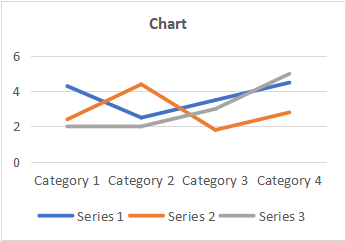
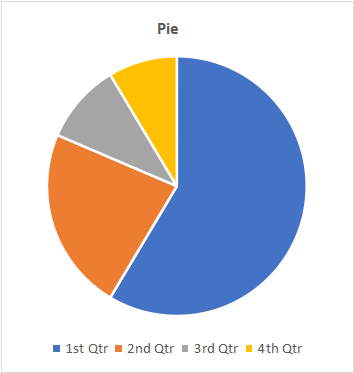
Figure 2-3: This is a figure. If there are multiple figures, they should be listed as: (the name of figure/Chart) Description of what is contained in the first figure; (Pie) Description of what is contained in the second figure. Figures should be placed in the main text near to the first time they are cited.
Table 2: This is a table. Tables should be placed in the main text near to the first time they are citied.
| Title 1 | Title 2 | Title 3 | Title 4 |
| Entry 1 | Data | Data | Data |
| Entry 2 | Data | Data | Data |
| Entry 3 | Data | Data | Data |
3.3 Editing of mathematical components
3.3.1 Displayed Equations
Each equation must be introduced and discussed in the text.
Example 1:
H2 + O = H2O, where one mole of Dihydrogen [H2] gas and one mole of Oxygen [O] gas combine to form one mole of liquid Water [H2O]. (1)
Example 2:
E = mc2 , where the increased relativistic Mass [m] of a body times the Speed of light squared [c2] is equal to the Kinetic energy [E] of that body. (2)
3.3.2 Inline expression
Short equations or symbols should be included directly in the text.
Example 3:
The production cost function can be defined as C = FC + VC(q), where FC represents fixed cost and VC(q) is the variable cost depending on output q. (3)
3.3.3 Symbols and Units
Use International System of Units (SI Units) constantly throughout the manuscript.
Example 4:
kWh – Kilowatt hour, m3 – cubic meter, s – second, kg – kilogram, mol – mole and etc. (4)
3.3.4 Theorems, lemmas, propositions, and corollaries
Each theorem and related elements should be numbered sequentially within the article or by section (Theorem 1, 2, 3, etc., Lemma 1, 2, 3…etc., Proposition 1, 2, 3, etc., Corollary 1, 2, 3, etc.)
Example 5:
Theorem 1:
Proof 1:
Corollary 1:
Lemma 1:
4.Discussion
Authors should discuss the study’s main findings, in relation to the research objectives and existing literature. This section should explain the significance of the results, highlight theoretical and practical implications, and identify consistencies or differences with previous studies. The discussion should clarify why the results matter and how they contribute to advancing knowledge in intelligent and sustainable systems.
5.Conclusion
The conclusion should avoid introducing new data, analyses, or references. It should synthesize the insights drawn from the study and order a final perspective on the topic. Authors may also include a brief discussion of future research directions.
6.Patents (if applicable)
If the research involves patented technology, processes, or inventions, authors should provide complete and accurate information about the patent.
7.Author Contribution
The research with several authors, the Author Contribution section should clearly specify the role and responsibility of each author in the research and publication process. Authors should use the CRediT (Contributor Roles Taxonomy) to describe contributions. The common contributor roles taxonomy includes Conceptualization (initials), Data curation (initials), Formal analysis (initials), Finding acquisition (initials), Investigation (initials), Methodology (initials), Project administration (initials), Resources (initials), Software (initials), Supervision (initials), Validation (initials), Visualization (initials), Writing – original draft (initials), Writing – review & editing (initials).
8.Funding/Acknowledgements
Authors should provide a clear and accurate disclosure of all financial support that contributed to the completion of the research. If multiple sources of findings supported different aspects of the study, each should be listed separately. The information regarding the full name of the funding agency, the great number(s), and the recipient(s) of each grant must be provided by authors. The Acknowledgements section clearly specifies the specific contributions made by each relevant individual.
Example: The research was supported by the [Name of the organization], Grant #12345.
Example: This research received no external funding.
9.Abbreviations (if applicable)
JFED – Journal of Financial and Economic Dynamics
AI – Artificial Intelligent
SDGs – Sustainable Development Goals
ICT – Information and Communication Technology
WTO – World Trade Organization
etc – Et cetera
10.References
References must be accurate, complete, and consistently formatted according to APA 7th edition style. We strongly recommend including essential bibliographic information: Author names, Publication year, Title, Periodical/Book title, Volume, Issue, Pages, and DOI/URL.
In-text citations should appear in parentheses and be placed before punctuation. Examples:(Smith, 2020), (Smith & Lee, 2021), (Smith et al., 2022).When citing a specific page or page range: (Smith, 2020, p. 5) or (Smith & Lee, 2021, pp. 50–55).
Reference examples (APA 7th):
Author, A. B., & Author, C. D. (Year). Title of article. Title of Periodical, Volume(Issue), Page range. https://doi.org/xxxx
Author, A., & Author, B. (Year). Title of chapter. In E. Editor & F. Editor (Eds.), Title of book (2nd ed., Vol. 2, pp. 110–120). Publisher.
Author, A., & Author, B. (Year). Title of book (3rd ed.). Publisher.(A. Author & B. Author, personal communication, Year). (Not included in reference list)
Author, A. B., Author, C. D., & Author, E. F. (Year, Month Day). Title of presentation [Conference presentation]. Name of Conference, Location, Country. URL
Author, A. A., & Author, B. B. (Year). Title of web page. Site Name. URL